
We distinguish pocket square vs handkerchief by purpose: a pocket square decorates your jacket’s breast pocket, while a handkerchief serves practical tasks such as wiping your face. For a polished display, choose fabric that supports your preferred fold; for everyday use, choose a soft, absorbent cloth with suitable washing instructions.
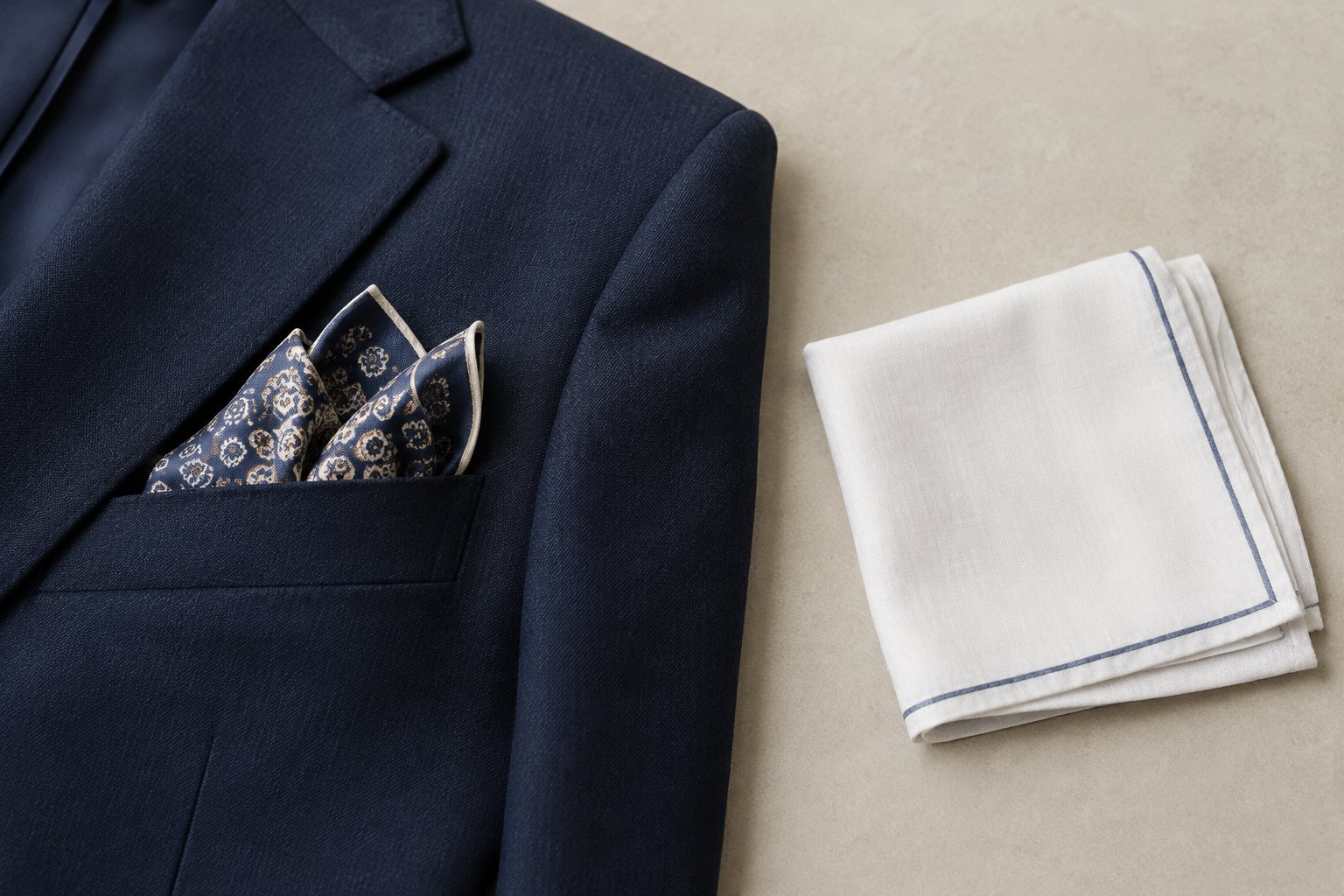
Pocket squares and handkerchiefs share materials and overlapping sizes. A clean linen or cotton handkerchief also works as a decorative square when its weight and dimensions fit your jacket. For buyers, the useful distinction starts with how the customer will wear, handle, and care for the finished product.
What Sets Decorative and Practical Squares Apart?
We separate decorative and practical squares through their intended use, then match the fabric and construction to that job. Pocket fit and care needs help explain why similar-looking cloths perform differently.
Purpose and Placement: Display or Everyday Use?
A pocket square sits partly visible in the jacket breast pocket. Its color, exposed edge, and folded shape contribute to the outfit, so appearance drives the design.
A handkerchief stays within reach in a trouser pocket, an inside jacket pocket, or a bag. Softness against the skin and performance after washing take priority for practical use.
We use the following distinctions when discussing a product brief:
| Criterion | Pocket square | Handkerchief |
|---|---|---|
| Main purpose | Decorative display | Personal use |
| Placement | Jacket breast pocket | Concealed pocket or bag |
| Fabric priority | Drape and fold support | Softness and absorbency |
| Edge priority | Visible finish | Comfortable, secure hem |
| Care priority | Preserve appearance | Suit repeated washing |
Silk, Linen and Cotton: Drape, Structure and Absorbency
We recommend a silk pocket square when you want fluid drape or a soft puff. Silk twill offers a visible diagonal texture, while silk satin gives a smoother, brighter surface. Fabric weight and finishing affect how firmly either holds a fold.
Linen brings a drier feel and more structure, making it useful for a straight exposed edge. A linen handkerchief also serves practical use when its finish feels comfortable against the skin.
Cotton works in both categories. Crisp cotton supports flat or pointed folds, while a softer cotton handkerchief suits wiping and repeated laundering. Absorbency also depends on the weave and finish, so fiber content alone gives an incomplete picture.
How Do Typical Finished Sizes Compare?
We treat pocket square size as a fit choice, with room for different jacket pockets and folds. Common examples include 30 cm, 33 cm, and 40 cm squares, approximately 12, 13, and 16 inches.
Handkerchief dimensions overlap with those sizes. Smaller styles include 28–30 cm squares, while larger formats provide more usable cloth.
Our pocket-square range includes 33 cm and 40 cm constructions. A larger lightweight square provides fabric to anchor a puff; a smaller or lighter square helps reduce bulk in a shallow pocket. Finished measurements should describe the hemmed product, since edging consumes part of the cut fabric.
Can You Use a Handkerchief as a Pocket Square?
We recommend a clean cotton or linen handkerchief as a substitute when it folds neatly and sits comfortably in your breast pocket. Its product label has less effect on the result than its condition and construction.
When a Clean Cotton or Linen Square Works
A plain white handkerchief is a useful option for a restrained jacket outfit. Fine cotton gives a clean folded line, while linen adds a lightly textured edge.
We suggest checking the visible area for stains, worn threads, and heavy creases before styling it. A monogram also works as a decorative detail if its position suits the fold.
Reserve that cloth for display while you wear it. Once used for a practical task, put it away until it has been washed.
Check Pocket Bulk, Fabric Weight and Fold Stability
We judge fit with the jacket on, because a tidy fold on a table gives only part of the answer. Thick cloth creates stacked layers, especially when folded repeatedly to fit a narrow pocket.
Use this quick check:
- Fold the square to match the pocket’s width.
- Insert it without forcing the pocket open.
- Check the jacket front for a visible bulge.
- Move your arms and sit down, then check whether the fold stays in place.
If the square sinks, adjust its folded height or choose a format that provides more support inside the pocket. If it pushes the pocket outward, reduce the layers or try lighter cloth.
Can a Bandana Substitute for a Decorative Square?
We consider a bandana suitable for casual styling when its size and weight fit the jacket. Its bold print pairs naturally with an informal sport coat or workwear-inspired outfit.
The main challenge is the amount of cloth. A large bandana requires extra folding, which increases pocket bulk and changes how much of the pattern shows.
Choose a clean bandana with secure edges and test it in the breast pocket. For conservative business dress or formal events, a plain cotton or linen square offers an easier starting point.
Which Folds and Etiquette Suit the Occasion?
We match the fold to both the cloth and the dress code. The amount of fabric on display also changes how restrained or expressive the result feels.
Presidential Fold or Puff Fold: Match the Fabric and Setting
We favor the presidential fold for a straight, controlled line above the pocket. Cotton and linen support this shape well when pressed and folded to the pocket’s width.
To form it, fold the square into a narrow rectangle, then turn up the bottom to set the visible height. Keep the top edge level and adjust the base inside the pocket.
A puff fold suits the soft drape of silk pocket squares. Pinch the center, gather the hanging fabric, fold the ends underneath, and place the gathered portion into the pocket. Ease the rounded top into shape without packing it tightly.
From Formalwear to a Sport Coat: Context Matters
We recommend a restrained white square as a practical starting point for traditional Western formalwear. A flat fold in linen or silk keeps the chest area controlled beside a bow tie.
Business settings call for attention to local expectations. A small, neat display suits a conservative office, while a creative workplace gives you more room for pattern and color.
With a sport coat, a silk puff introduces softness against textured wool. These are styling conventions within Western tailoring; wedding customs, regional dress, and the host’s instructions deserve priority when they set a different expectation.
Why Carry a Separate Cloth for Practical Use?
We advise carrying a separate handkerchief when you expect to need a cloth during the day. That keeps the styled square in place and protects delicate finishes from frequent handling.
Keep the practical cloth clean and store a used one separately from items you want to keep clean. Offer another person only a fresh, unused cloth.
If you use the displayed square in an emergency, remove it from display afterward. Wash or clean it according to its care instructions before wearing it again.
How Do Finishing and Care Differ?
We specify decorative edges for their visible character and practical hems for comfort and repeated use. The care plan must account for the whole product, including its dyes and stitching.
Hand-Rolled and Machine-Hemmed Edges Serve Different Briefs
A hand-rolled edge forms a small rounded border secured with fine stitches. We use this finish on our silk pocket squares, where the hem becomes part of the visible design.
Machine hemming supports a more uniform production brief. Our 40 cm linen-cotton option uses a machine-hemmed edge.
For a practical cotton handkerchief, a secure hem with comfortable corners supports frequent handling. Neither method alone proves quality: review loose threads, uneven tension, puckering, and bulky corners on the finished sample.
Decorative Finishes and Repeated Laundering Need Different Care
We recommend following the product’s care label, even when two squares share the same fiber content. A printed silk pocket square and a plain cotton handkerchief have different finishing details to protect.
Use cool, gentle cleaning only where the label permits it, and avoid wringing delicate cloth. Press silk with the recommended low setting and a protective cloth to reduce the risk of surface damage.
For a handkerchief intended for frequent washing, assess shrinkage and hem shape after the proposed wash process. A linen pocket square also needs a care check: pressing restores a crisp display, while the wash method must suit its finish and any decoration.
What Should Buyers Specify and Call the Product?
We recommend naming the product by its intended use and recording measurable construction details in the specification. Clear wording helps your customer understand what they are buying and gives production a defined approval target.
Name the Product by Its Intended Use
Use “pocket square” for a decorative accessory designed for the jacket breast pocket. Add useful details such as “silk twill,” “hand-rolled,” or the finished dimensions where those claims match the product.
Use “handkerchief” for a cloth developed for practical personal use. Its description should explain the material and care requirements clearly.
We also recognize “pocket handkerchief” as a traditional menswear term for a decorative square. If you use it, state “decorative jacket accessory” in the description so customers understand the purpose. Describe a product as suitable for both uses only after approving its care and performance for each.
Buyer Checklist: Fabric, Finished Size, Hem, Artwork and Care
We ask buyers to define the finished article before artwork moves into production. A useful specification includes:
- Intended use: decorative display, practical use, or an approved dual-purpose brief.
- Fabric: fiber content, weave, weight, and desired feel.
- Finished size: dimensions after hemming, plus an agreed tolerance.
- Hem: hand-rolled or machine-hemmed construction, with an approved corner finish.
- Artwork: scale, border proportions, orientation, and color references.
- Care: proposed cleaning method and any required performance checks.
- Branding and packing: label position, folding method, sleeve, or gift box.
- Quantity: pieces per design and any coordinated products.
For silk pocket squares, we rescale artwork to the smaller format while keeping borders proportional. This helps preserve the design when only part of the square is visible.
Approve a Physical Sample Before Bulk Production
We recommend approving a made-up square in the selected fabric and hem before releasing bulk production. A digital rendering shows artwork placement; the physical sample establishes pocket fit and handling.
Our development includes a repeat-scaling plan, printed fabric or strike-off, and a made-up square for approval. Our silk pocket squares start at 300 pieces per design, with production lead times of 25–35 days for 33 cm styles and 28–38 days for 40 cm silk twill.
Through our custom pocket-square service, we coordinate construction and artwork with finishing and packing. Share your intended use, dimensions, fabric, and quantity so we can recommend a suitable construction.
Choose for Display, Specify for Use
We recommend choosing a pocket square for its appearance in the jacket and a handkerchief for its practical handling and care needs. Cotton and linen serve either role when their construction suits the job.
For your own outfit, check the folded cloth in the actual breast pocket. For a product order, approve the finished dimensions, hem, artwork, and care instructions against a physical sample before bulk production.