
We recommend silk ties for premium collections and corporate gifts because of their soft feel and fluid drape, and polyester ties for cost-focused uniforms and promotions because of their lower material cost and wrinkle resistance. For a custom tie order, the strongest choice pairs the right fabric with suitable construction and a clear care standard.
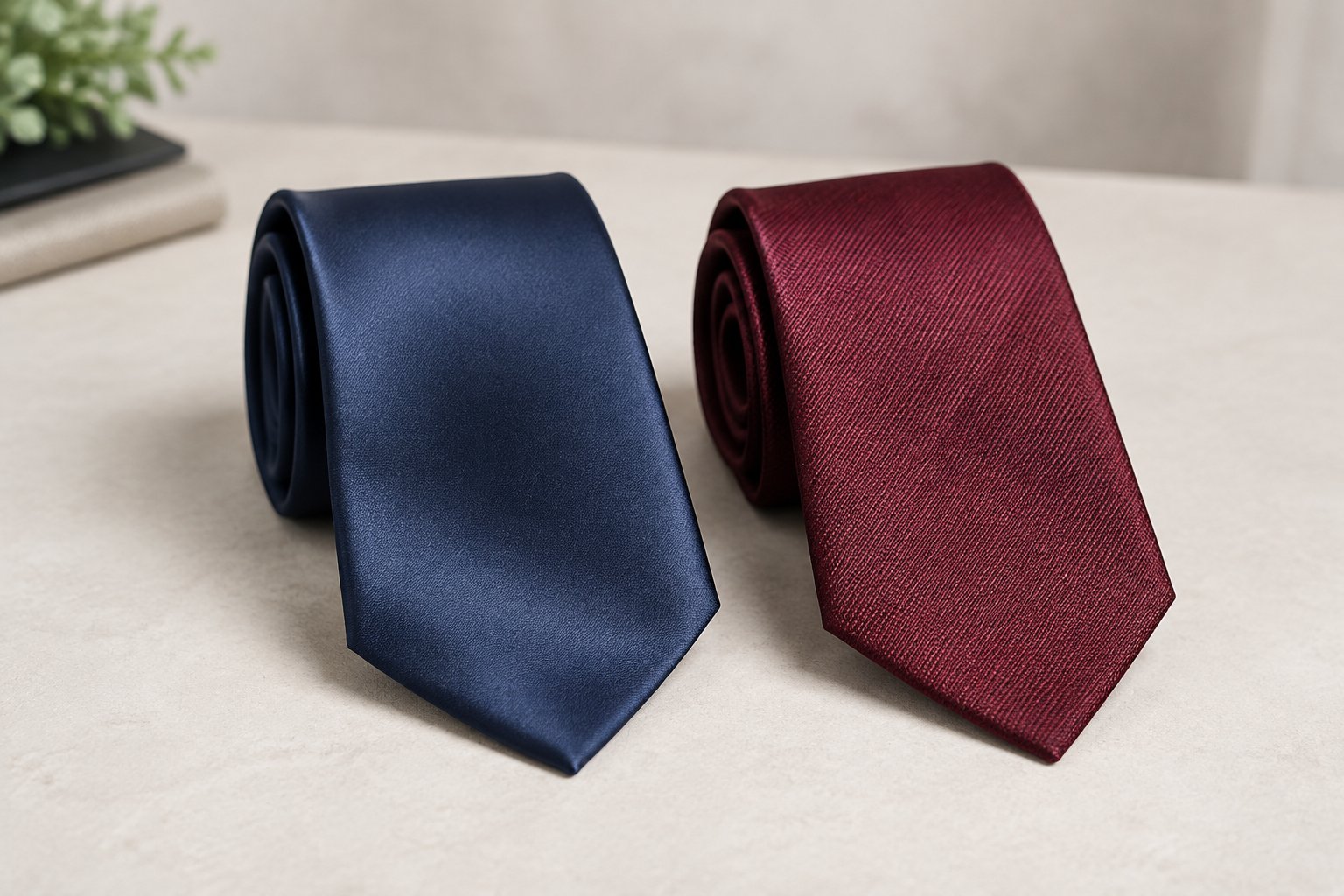
The practical question behind polyester vs silk ties is how the finished product serves your buyer. A smooth polyester tie with balanced interlining offers a polished uniform option. A silk tie earns its premium through the cloth and finishing, supported by packaging that fits its gift or retail role.
Our recommendation is to compare finished samples with matching specifications. Fibre content alone leaves too much unanswered about knot size, surface shine, shape retention, and cleaning.
Which Material Fits Your Tie Programme?
We match silk to products where feel and presentation support the selling price, and polyester to orders where budget and repeat wear guide the brief. Offering both gives separate customer groups access to the same brand design.
| Decision point | Silk ties | Polyester ties |
|---|---|---|
| Material cost | Higher | Lower |
| Surface character | Soft lustre | Finish-dependent sheen |
| Drape | Fluid | Weight-dependent |
| Priority uses | Premium retail, gifts | Uniforms, promotions |
| Cleaning brief | Professional care common | Finished-tie approval needed |
| Quality approval | Knotted sample | Knotted sample |
When Silk Suits Premium Collections and Corporate Gifts
We recommend silk neckties when the recipient will judge the product closely by touch and presentation. Executive gifts and premium retail collections give the fabric’s drape a clear role in the buying decision.
For corporate gifts, our development brief also covers logo scale and the opening experience. A small woven motif supports a restrained design, while printed silk suits detailed artwork. The finished tie and its box should be approved together so the presentation matches the intended price position.
When Polyester Makes Sense for Uniforms and Promotions
Our starting recommendation for cost-focused uniforms is polyester, especially when buyers need a consistent look across a large group. Its wrinkle resistance supports frequent wear, while the lower cloth cost leaves room for spare stock or branded packing.
Promotional orders need the same care with appearance. We recommend checking the polyester tie under office lighting and in daylight. Excess shine, stiff interlining, or poor knot shape will affect the result even when the colour matches the brief.
When Offering Both Materials Is the Better Choice
We recommend a dual-material range when one design serves different budgets. A brand might offer silk for gift buyers and polyester for staff issue, with separate product descriptions and care instructions.
Each version needs its own approval. The same artwork produces different visual effects across fibres, and the interlining might need adjustment to achieve a similar knot. Our approach keeps the collection coordinated while treating each finished tie as a separate product.
What Determines Sheen, Feel and Knot Quality?
Our quality assessment considers the fabric and the internal build together. Fibre sets part of the character; weave, finishing, and sewing shape how neckties look and behave when worn.
Fibre, Weave and Finishing Do Different Jobs
We separate these choices early in development. Silk and polyester are fibres. Twill and satin describe weaves, while jacquard describes how woven patterns are formed.
Satin’s longer surface floats produce stronger shine. Twill shows diagonal ribs and gives a more textured surface. Finishing then changes softness and body. For a useful silk vs polyester comparison, we recommend matching the weave and desired finish before judging the fibre difference.
A bright silk satin and a matte polyester twill answer different design briefs, so their sheen alone offers little basis for a purchasing decision.
How Weight and Texture Affect Drape and Knot Grip
We assess weight alongside tie width and the intended knot. Light silk fabric paired with a substantial interlining behaves differently from heavier cloth with a lighter core.
Texture also affects grip. A smooth surface needs careful knot adjustment; a textured weave provides more friction. Neither feel guarantees the right result for every design.
Our sample review looks at the knot’s bulk, the dimple, and how the blade hangs. You should approve those features using the knot your customer or uniform team expects to wear.
Why Interlining, Bias Cutting and the Slip Stitch Matter
Our construction brief covers the hidden parts that give a tie its body. Interlining supports the shape, while bias cutting lets woven cloth bend around the knot and hang with some give.
A slip stitch closes the back seam with controlled flexibility. Balanced tension helps the tie move during tying and recover after use. Tight sewing restricts that movement; loose sewing leaves an unstable seam.
For a handmade silk tie, we recommend asking which operations are completed by hand. The finished sample should show even edges and a straight hang, supported by clear construction details.
What Drives the Cost Difference?
Cloth accounts for an important part of the price gap, while construction and packing determine how much of that gap remains in the finished order. We compare quotes using the same design brief and delivery terms.
Cloth and Dyeing or Printing Costs
Our fabric assessment covers fibre content, weight, usable width, and cutting yield. Silk cloth carries a higher material cost than polyester, but the size of the finished-tie difference requires a matched quotation.
Pattern production adds another cost layer. Custom jacquard needs loom setup and card work. Screen printing adds screens and colour separations; digital printing has a different setup structure.
Through our custom tie manufacturing service, we confirm weave, momme or fabric weight, and fold construction before artwork goes to the mill.
Sewing, Construction and Packing Costs
We price sewing against the agreed build. Fold construction, tipping fabric, interlining, and hand finishing all affect labour and material use.
Our range includes 3-fold, 5-fold and 7-fold ties in silk, polyester and blends. Those choices require separate cost checks even when the face fabric stays the same.
Packing deserves its own line in the quote. A labelled sleeve and a rigid gift box involve different materials and assembly work. You should compare silk ties and polyester ties with equivalent packing before using the unit-price difference to select a fibre.
How Quantity, Colourways and Setup Affect Unit Cost
Our minimums reflect the production route. Custom jacquard ties start at 500 pieces per design; printed silk ties start at 300 pieces per design. Stock fabric with your own label starts at 300 pieces per style.
Higher quantities spread setup costs across more units. Extra colourways add development work and separate colour approvals, with minimums confirmed for the chosen route.
For fair price breaks, we recommend requesting the same quantities for both materials. Keep sampling, setup, packing, inspection, and freight visible so the comparison remains useful.
How Should Buyers Compare Durability?
We compare durability through defined fabric tests and finished-tie checks that match the intended use. A fibre label alone gives too little information about surface wear or shape retention.
What to Ask About Snagging and Pilling
Our first questions concern the weave and yarn. Long surface floats increase exposure to catches, while textured yarns need a closer review for surface fuzz and pilling.
For snagging or pilling results, you should request:
- The test method and fabric reference.
- The exposure or cycle count.
- The rating scale and agreed pass level.
- Confirmation that the tested cloth matches bulk production.
We recommend keeping snagging and pilling separate in the specification. A fabric’s performance against rubbing does not establish how it handles a sharp catch.
Which Colourfastness Results Match the Intended Use?
We select colourfastness checks around actual exposure. Dry and wet rubbing help assess colour transfer onto a shirt. Cleaning-related tests should match the approved care method, while light exposure deserves attention for uniforms worn near windows or outdoors.
At Guridio, our print controls include wash and rub colour-fastness tests on a sample from each lot. The first metre of each printed roll is compared with the signed strike-off under daylight.
You should agree the test method and acceptance grade before production. Dark grounds and pale shirts deserve particular attention during approval.
How to Assess Knot Recovery and Shape Retention
We knot and hang samples and first-off bulk ties to assess knot formation and drape. This checks the combined effect of cloth, interlining, cutting, and sewing.
For a dual-material order, we recommend using the same knot and a consistent tightening method. After untying, compare the crease, blade alignment, and back seam after an agreed rest period.
Record acceptable results against the approved sample. You should also review the tip shape and edges after the planned cleaning process, since a fabric test leaves the internal construction unassessed.
What Care Does Each Finished Tie Require?
Our care recommendation follows the complete tie, including its interlining and tip lining. The outer fabric provides only part of the information needed to approve washing or professional cleaning.
Why Polyester Does Not Automatically Mean Washable
We treat washability as a finished-product requirement. A polyester shell might handle water while an internal layer shrinks, shifts, or puckers.
Silk ties also need care suited to their dyes and construction. Silk and wool ties should typically be dry cleaned, with the care tag governing the method.
If your uniform requires washing, we recommend stating that requirement at the start. The finished sample then needs cleaning trials and a shape review before bulk approval.
How to Handle Stains, Heat and Storage
Our first recommendation after a spill is to blot gently with a clean white cloth. Rubbing spreads the mark and risks damaging the surface.
For silk, valuable ties, or unknown stains, professional assessment is the safer next step. Home treatments risk leaving rings or lifting dye. Polyester also needs caution with oily marks and heat.
For routine tie care, we recommend reversing the knot after wear and storing the tie loosely rolled or supported on a smooth rack. Keep it away from direct sunlight, sharp fittings, and pressure from crowded packing.
Why Neither Fibre Has a Guaranteed Lifespan
We avoid promising a fixed service life for either material. Wear frequency, knot tension, and cleaning all affect how soon a tie needs replacement.
A polyester tie worn daily faces different demands from a silk gift tie worn occasionally. Repeated use concentrates wear around the knot and neck area in both cases.
For staff orders, our recommendation is to define replacement signs: visible fraying, lasting twist, surface shine from wear, or a knot area that keeps deep creases. These give your team clearer guidance than an unsupported lifespan claim.
How Do You Specify a Fair Dual-Material Order?
We recommend one shared design brief supported by separate material specifications and approvals. This keeps the comparison fair while allowing the construction adjustments each fabric needs.
Align Dimensions, Weave, Construction and Packing Before Comparing Quotes
Our quotation checklist starts with finished length and blade width. It then records the weave, pattern scale, fold construction, interlining, tipping, labels, and packing.
You should ask suppliers to identify any difference between the two quoted builds. A lower price paired with a lighter core or simpler box changes the comparison.
Our wholesale tie service supports this type of quantity-based enquiry. Supplying the same artwork and packing requirements gives us a clearer basis for comparing material options.
Approve Physical Colours and Knotted Samples in Both Materials
We recommend a separate physical colour approval for silk fabric and polyester. Their surfaces reflect light differently, so a shared colour reference still needs approval on each cloth.
For printed designs, approve a strike-off on the chosen fabric. For jacquard, review a real woven sample. Our custom jacquard fabric service includes a sample length before bulk approval.
The made-up tie then confirms scale and placement. You should check the design at the knot and tip, followed by its appearance under the lighting used in the intended setting.
Confirm Material-Specific Minimums, Lead Times and Inspection Criteria
Our first product samples are generally finished in 10–15 working days and couriered with specifications for approval. Bulk timing follows the selected construction.
Published tie production lead times include:
- Custom jacquard: 35–45 days.
- Printed silk: 30–40 days.
- Stock fabric with own label: 25–35 days.
- 7-fold construction: 30–40 days.
We confirm polyester minimums and timing against its chosen production route. Your order should also state dimension tolerances, approved colour references, and inspection criteria. Our final inspection records include photographs and signed records for review before dispatch.
When Wool or Linen Deserves a Separate Brief
We recommend a separate development brief when your collection calls for wool ties or linen ties. Their texture and seasonal role change the fabric choice and the expected finish.
Wool adds a fuller, matte character suited to cold-weather ranges. Linen brings a dry feel and visible texture, with creasing forming part of the appearance.
Silk blends offer another route, but each composition needs its own sample. You should specify the fibre percentages and desired surface character, then approve the finished knot and drape for that blend.
Choose the Material Around the Job
Our recommendation remains silk for premium retail and gifting, with polyester for cost-focused uniforms and promotional orders. Both need suitable interlining and well-controlled sewing to deliver the intended result.
A fair purchase compares matched specifications, approved physical colours, and finished ties tied in the expected knot. Care instructions and durability criteria should be agreed before bulk production.
To compare constructions with us, send your intended use, design, quantity, and target price through our enquiry form. Include the required dimensions and packing so we can recommend a silk or polyester build against the same brief.